Sunday, 5 April 2020

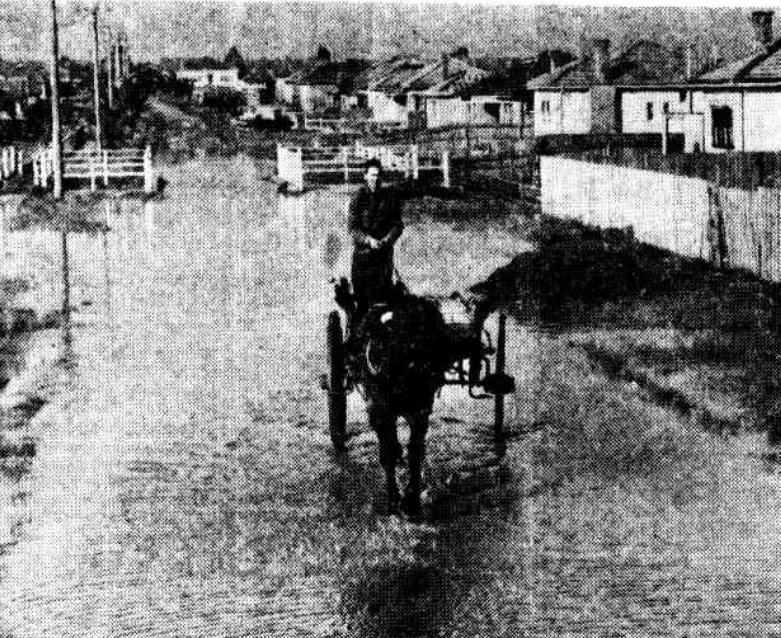
Floods in Coburg, October 1916


The rain's been coming down in buckets over the past few days and each morning I've gone out to find another 20mm or more in the rain gauge. Since last Thursday I've recorded 80mm - amazing.

The garden beds are very boggy, but the plants seem to love it, and so do I when I see the first of the broad bean shoots coming through the ground.

Let's hope it eases off now and we see some sunshine again soon. We could all do with some sunshine in our lives right now!

Taking you back 100 or so years now ...

The world was in the middle of a devastating world war when the photographs you see below were taken. 

A few months before (in July) Australian troops suffered more than five and a half thousand casualties in a two-day period at Fromelles. And between 23 July and 3 September 1916 23,000 Australians were killed or wounded in action at Pozieres and Mouquet Farm in France. Statistics like these certainly put the damage done by the October floods into perspective.


These two photos were featured in the Weekly Times, 7 October 1916, The first is of the Merri Creek in flood at Coburg. The second is of the Coburg Weir (at Coburg Lake) overflowing. The photographer was E. Moody.

And to put these floods into perspective again, the men at the Front had a terrible time over the (European) winter of 1916/17. The Somme campaign ended on 18 November but Australian troops manned the trenches during the bitter winter that followed. Rain, mud and slush turned to ice and the ground froze. Morale was low as men fell ill with rheumatism, bronchitis, trench foot and frost-bite and there were constant enemy raids and shelling.

One member of the 15th Battalion wrote 'One would open a tin of fruit or meat to find ice inside, or see liquid, spilled on his coat, freeze in a minute. The bread came frozen so hard that an ordinary knife made hardly an impression on it...'

Floods seem like nothing in comparison.


Tuesday, 31 March 2020

Bill ('Mac') McAlpine - tramways employee for 39 years


Herald, 2 January 1951


The article says it all, really. William McAlpine was a Tramways man through and through.

He married in 1913 and he and his wife Agnes had two children, both born while they were living in Coburg. When he retired, the McAlpines were living in Shaftsbury Street, Coburg. 'Mac' was retired for over 20 years and no doubt he enjoyed time in his garden. He mentions in this article that he was 'thinking about' taking his wife for a holiday in their car. I wonder whether they went and if they did where they went. 

Agnes McAlpine died in 1963 and William in 1972. They were laid to rest in the 2nd Avenue Rose Garden at Fawkner Memorial Park.


Tuesday, 24 March 2020

A 1933 upgrade to the buses on the Coburg to Heidelberg route


Herald, 16 January 1933

This photo of the latest update to a local bus company's fleet of buses was accompanied by an article telling us that the owner of the bus line, A.L. Windram, had just bought four new buses, each capable of carrying sixteen passengers. He employed eight men and in a time of high (and rising) unemployment, he  claimed to benefit many others through his fleet of buses. 

The article went on to note that 'it is estimated that indirectly, in the handling of the 15,600 gallons of petrol, the manufacture of £280 worth of tyres, and the hundred and one other essential details needed in the successful operation of transport service, another 50 families receive their share of support from this growing industry.'

This was at the height of the 1930s Depression and if you think about it, we are facing many features of those dark times today. 

It's hard to put a positive spin on things just now, but reminders like this that the world has faced tough times before and survived are helping me. I hope they help you, too.


English cricket eleven visits Lincoln Spinning Mills, February 1925


Herald, 6 February 1925

The visiting English cricket eleven were identified as (left to right): Woolley, Toone (manager), Strudwick, Tate, Sandham, Bryan, Gilligan, Mrs Douglas, Hearne, Freeman, Chapman and Douglas. [I have assumed that Mrs Douglas is the wife of the English team captain.]

Going by the date of the newspaper article, the visit took place between the third test at the Adelaide Oval which the Aussies won by 11 runs and the fourth test held at the MCG which the English won by an innings and 29 runs. Australia won the Ashes series 4-1. (source: Wikipedia)

Lincoln Mills opened in 1920 and was a major employer in the area. Most of it is now demolished but if you've ever been to Bunnings or Officeworks in Gaffney Street, you were there on the former Mills site.


Lincoln Mills, 1922. Image courtesy Coburg Historical Society.


1947 aerial view of Lincoln Mills, Gaffney Street, Coburg. 
Courtesy Coburg Historical Society.


During demolition, June 2007. Image courtesy Coburg Historical Society. 
(Photographer Lois Williams.)


Saturday, 22 February 2020

Coburg Primary School's 1925 facelift


Argus, 20 Feb 1925

The man waving his arm about is the Minister for Education, Sir Alexander Peacock and he's opening the new look Coburg State School no. 484 in Bell Street. The remodelling cost  £16,208 and the school claimed it could accommodate 1,500 children. (There were 1,250 on the roll.) On three and a half acres of land, the school was said to be one of the largest in Victoria. 

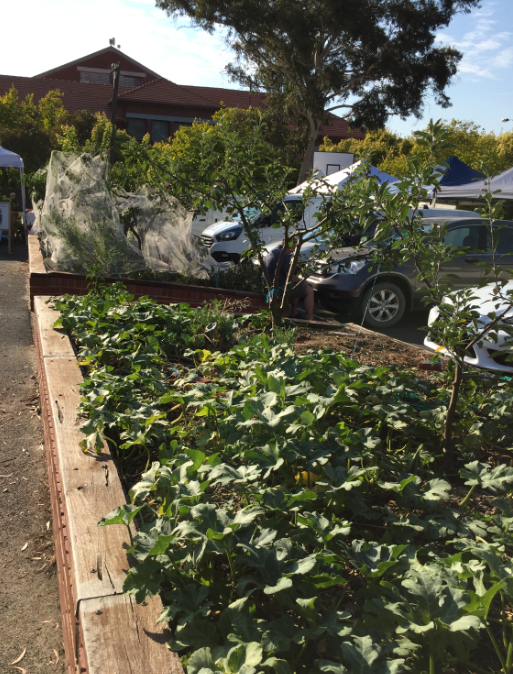
Move forward 90 years or so and here are some photos I took at the back of the school in March last year at a Saturday Farmers' Market.


It's all so very different from when I was a student there from 1962 to 1964. Sure, there were bubble taps and a playground, but it was all pretty stark. The playground was asphalt and divided by a huge shelter shed and toilets. 

The first photo you see here was taken standing in what was then the boys' playground. We girls only ventured there when we practised marching, or played rounders (as a class activity) and perhaps crossball and tunnel ball were practised there, too - pretty sure that's right. My memory tells me we did folk dancing in what was the girls' playground. And for some reason I think the folk dancing happened on a Friday afternoon. (I have no idea why I remember that, of all things.)

One of my favourite additions to the school grounds is the Chicken Wing on the school's western boundary.


I had to smile when I first saw it, because on the other side of the cyclone fence behind the Chicken Wing (and just a little further north) is what is now Peppertree Place, but was the Methodist Parsonage grounds in my day. That's where I lived and my dad had his own collection of chooks that roamed free-range through the garden during the daytime. He'd be chuffed to know that the school was growing vegies and keeping chooks, just as he had done next door all those years ago!


Saturday, 15 February 2020

Coburg 'Blitz' cyclists prepare for action, 1942


Herald, 5 January 1942


They might look like creatures from outer space, but these Coburg women, styling themselves 'Blitz' cyclists, donned their respirators, tin helmets and ARP (Air Raid Precaution) armbands and were ready to act as messengers if there were air raids in the area.

This might seem a little far-fetched to us from a distance of nearly 80 years, but there was a very real fear at the time (perhaps whipped up by local authorities who thought that Coburg citizens - and others - were not taking the war seriously enough) that Australia would be invaded. Air raid trenches were dug in local parks and school playgrounds. Plans were put in place to evacuate children to the country. A mock air raid took place at Coburg oval and air raid wardens were trained to deal with any potential attacks on the municipality. Melburnians soon became accustomed to brownouts and everyone was on the lookout for the enemy in their midst.

The fear levels of the citizens of Coburg may well have risen as a result of all this activity, but it is more than likely that women had more to fear from the problems presented by brownout conditions, especially once the 'Brownout Strangler' began strangling women. He murdered three women before being identified as American serviceman Edward Leonski. Leonski was hanged at Pentridge Prison in November 1942.

Several years later, an air observation post was put in place on the roof of Walker's Department Store in Sydney Road. Local volunteers used binoculars to spot aircraft activity and report it to Essendon aerodrome, especially important at a time when there was very little in the way of air traffic control. Historian Richard Broome recorded in Coburg, between two creeks that 'in the twenty months till the post was closed in October 1945, 17,451 aircraft had been spotted by 146 volunteers, many of them women and senior students.' 


Saturday, 8 February 2020

It's raining again - Merlynston floods, 1949


Herald, 20 July 1949


Age, 21 July 1949


The street identified in two of these photographs is Sussex Street, which runs all the way from Bell Street through Pascoe Vale and across Boundary Road in North Coburg, where it is very close to the Merlynston Creek, which one caption tells us had overflown. The grocer and the baker still managed to make their deliveries, however. The milkie didn't, but as we see here, Mrs G.A. Allsop saved the day and delivered milk to 'marooned householder' Mr E. Blackmore.